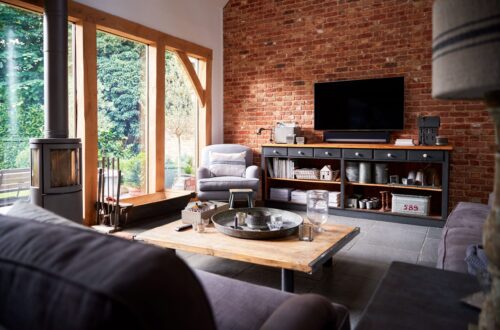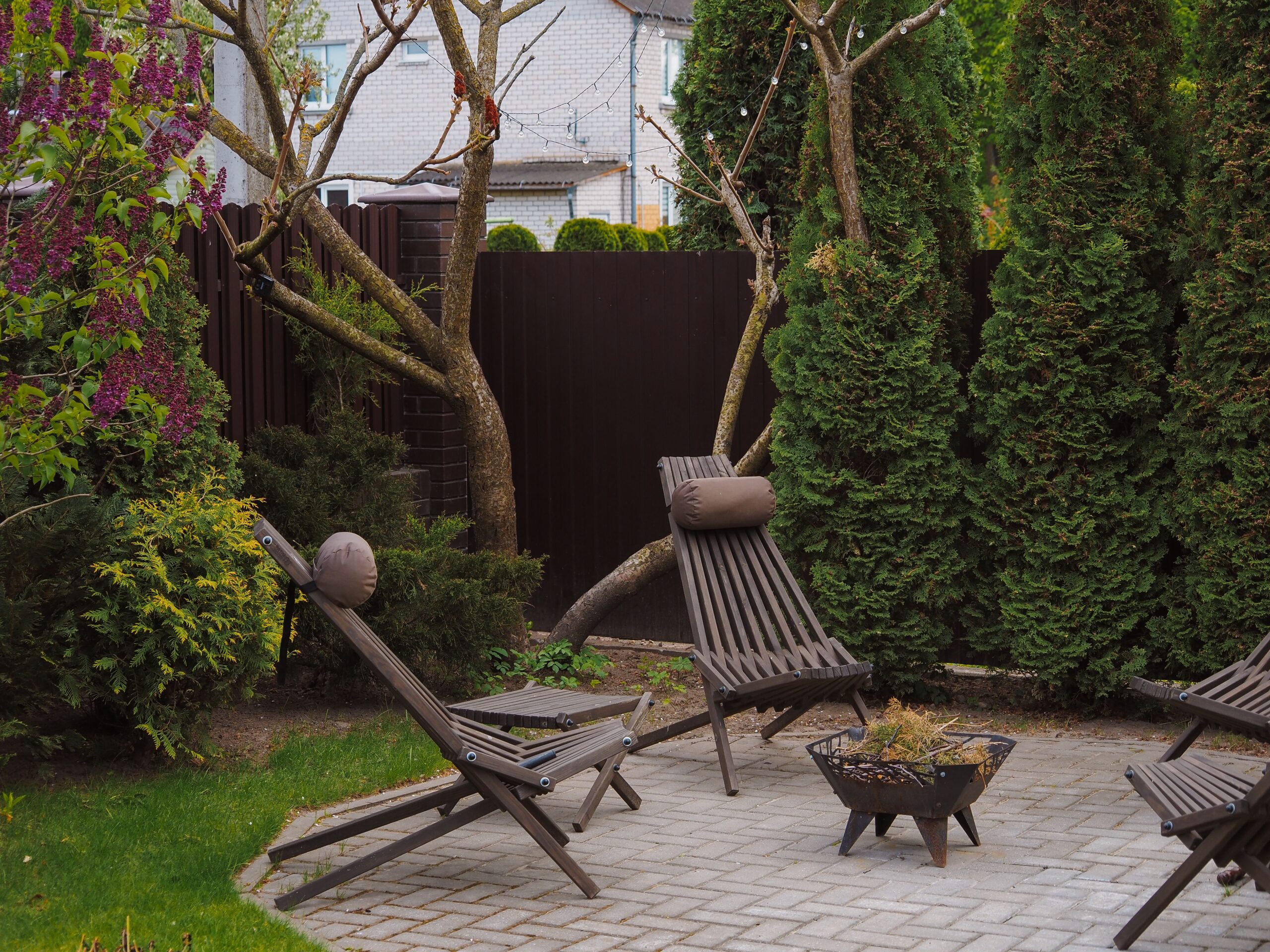
A small garden does not need to imitate a country estate to feel restorative. In fact, the most convincing outdoor retreats are often compact because they make you notice what is close: the scent of herbs beside a chair, the sound of leaves moving against a fence, or a warm pool of light after sunset.
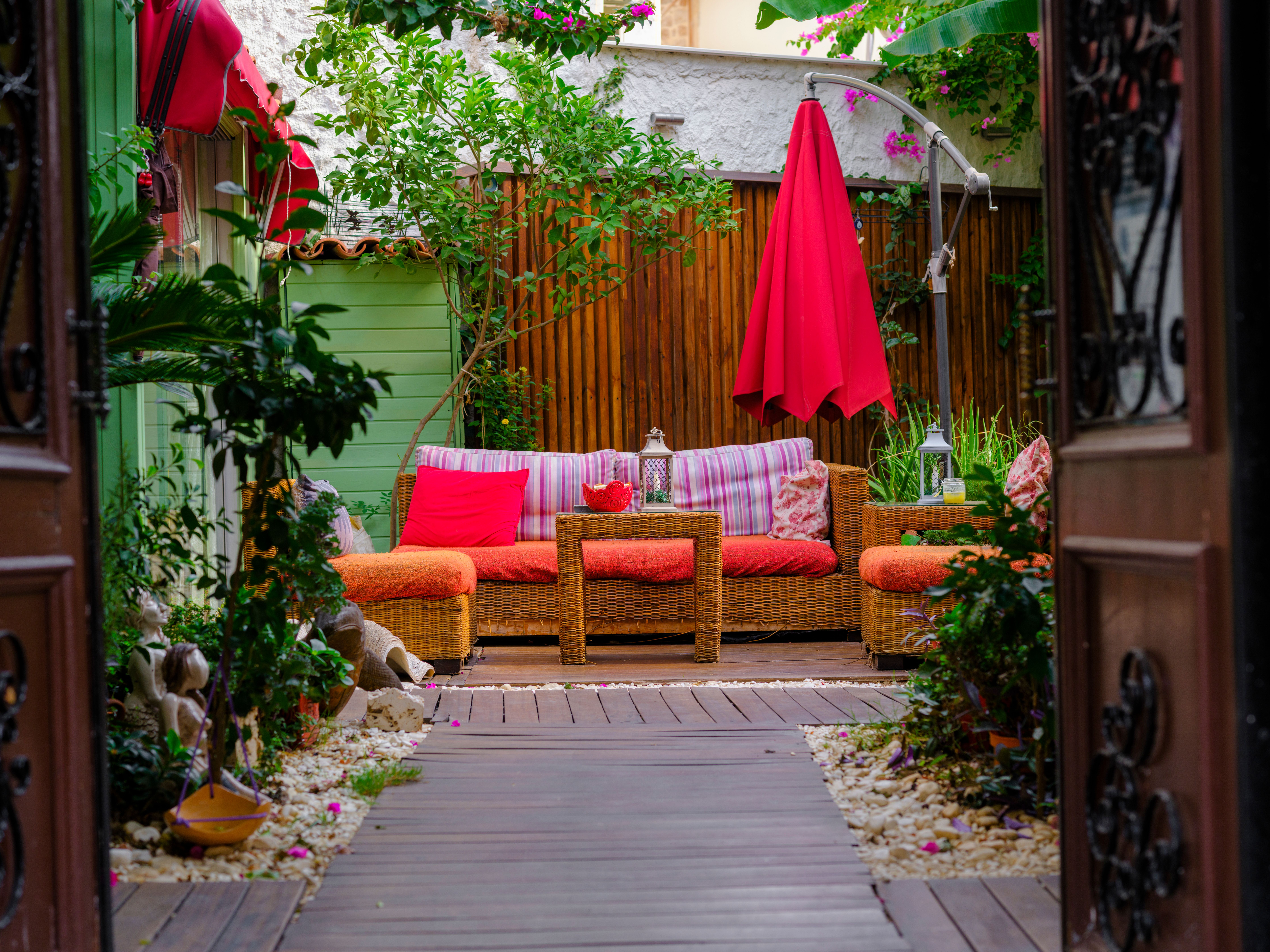
The useful shift is to stop treating the garden as a leftover strip around the house. Treat it as a room with a threshold, a view, a place to sit, and a reason to linger. A short run of decking can establish that room, but the surface alone will not create atmosphere. The layout, planting, lighting, and daily usability have to work together.
Start with the moment you want to create
Before choosing pots or paint, decide what “retreat” means in practical terms. A garden used for morning coffee needs a different arrangement from one intended for evening meals, reading, or watching children play. The best small-garden makeovers usually have one dominant use and one flexible secondary use.
Write down the moment in one sentence:
- “I want somewhere quiet to read for twenty minutes.”
- “I want to eat outside without carrying everything across the lawn.”
- “I want to see greenery from the kitchen window.”
- “I want the garden to feel welcoming after dark.”
That sentence prevents a common mistake: spending the entire budget on appearance while leaving no comfortable place to be. A beautiful garden that has nowhere to put a mug, book, cushion, or pair of muddy shoes is a display, not a retreat.
Make the garden feel longer without making it busier
Small spaces often feel small because every boundary is visible at once. The answer is not necessarily more planting. It is to interrupt the straight view and create a sense of sequence: an entry, a partial reveal, and a destination.
Try one or two of these moves:
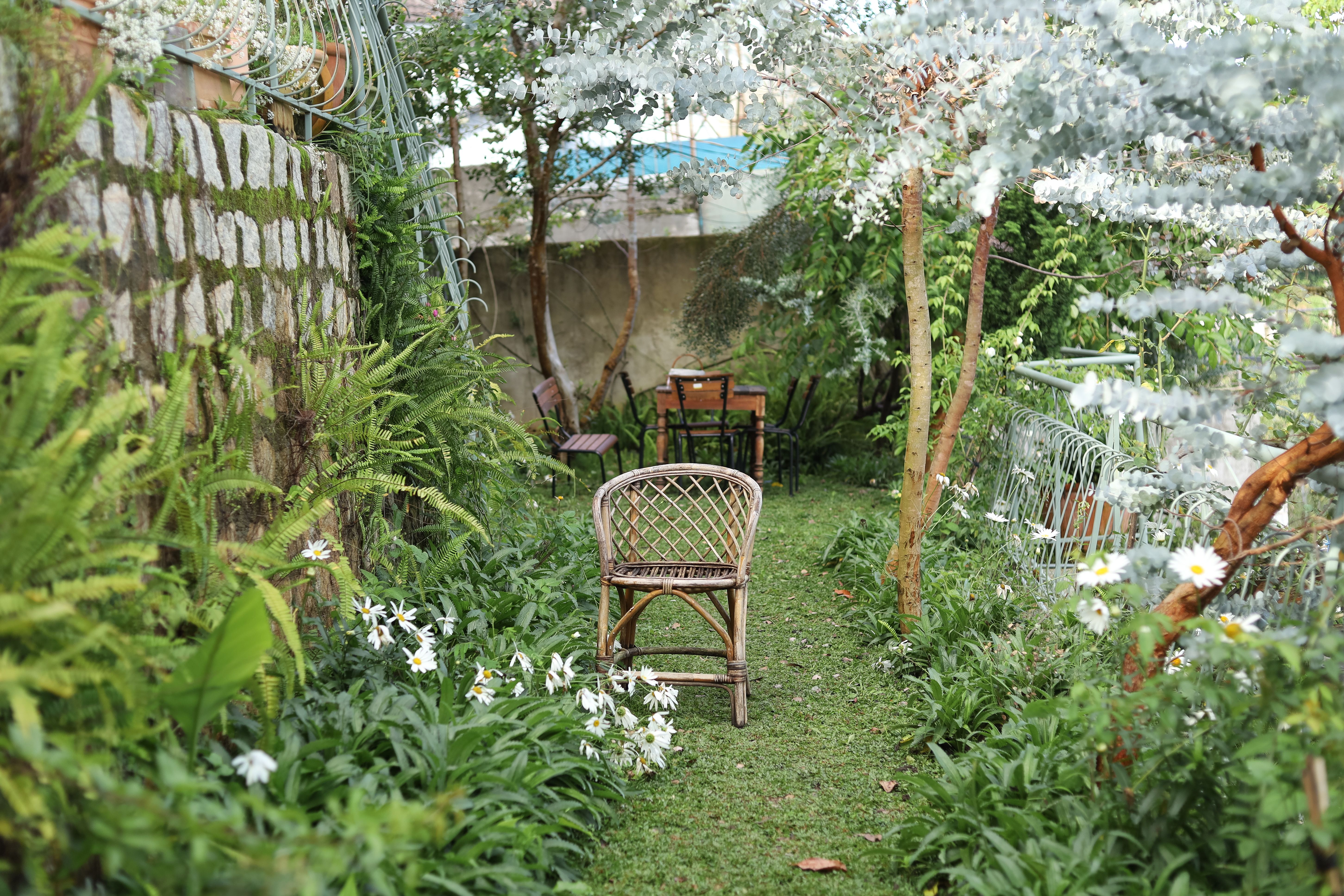
- Place a chair slightly off-axis instead of pointing it directly at the back fence.
- Use a narrow path or change of paving to suggest movement towards a seat.
- Hide part of the boundary behind a climber, slatted screen, or tall container.
- Repeat one material or colour from the house so the garden feels connected rather than tacked on.
- Keep the centre reasonably open if you need the space for walking, children, or entertaining.
The Royal Horticultural Society’s guidance on planting in small spaces makes a particularly useful point: think upwards, along walls, and through the space, not only across the ground. Shelving, trellis, hanging plants, and trained fruit can add depth without consuming the entire floor.
One caution: do not turn every surface into a feature. A small garden needs visual pauses. A plain wall, a quiet floor area, or a single generous pot can make the planted sections feel more abundant.
Plant in layers, not in a perimeter strip
The familiar arrangement of low plants around the edge and an empty rectangle in the middle is tidy, but it rarely feels immersive. A retreat works better when plants occupy several heights while leaving enough breathing room for the furniture.
| Layer | Useful role | Good place to use it | Watch for |
|---|---|---|---|
| Low | Softens paving and adds close-up texture | Path edges, pot rims, gaps beside seating | Plants that spread aggressively into walking areas |
| Middle | Creates colour, fragrance, and privacy at eye level | Containers, borders, the side of a seat | Too many unrelated colours competing at once |
| High | Draws the eye upward and screens boundaries | Trellises, climbers, small trees, tall pots | Wind exposure, mature size, and blocked windows |
| Overhead | Creates enclosure and filtered shade | Pergola, arch, trained climber, canopy | Darkness, difficult pruning, and weight on structures |
The table is a design framework rather than a planting prescription. Start by observing the conditions you actually have: hours of sun, reflected heat from walls, wind, drainage, and the view from inside the house. The RHS recommends choosing plants for the light and moisture available, and using containers where the existing soil is unsuitable.
For a more living, less decorative garden, include plants that offer nectar, pollen, shelter, or seed. A 2024 guide from University of Illinois Extension on pollinator-friendly container gardens notes that even small container displays can provide useful resources, provided plants are matched to the same light and moisture conditions.
In practice, that could mean combining a compact evergreen or structural plant with a flowering perennial, a trailing plant, and one aromatic herb. Use fewer plant types than instinct suggests, then repeat them. Repetition is what makes a small collection look intentional.
Choose materials that invite contact
Retreats are sensory spaces, so materials matter most where hands and feet meet them. Smooth timber, textured brick, cool stone, woven seating, and weathered metal each give the garden a different emotional temperature.
Rather than mixing several finishes, choose a restrained palette:
- One main hard surface for the floor or seating zone.
- One contrasting texture for a wall, screen, raised bed, or planter.
- One accent colour repeated in cushions, pots, or flowering plants.
Comfort is a design material too. A seat with a back is more likely to be used than a sculptural bench, and a small side table can make the difference between sitting down and merely admiring the furniture. If the garden is overlooked, solve that problem at the height of the seated eye first; a screen that blocks the whole sky may make the space feel enclosed rather than private.
Moveable containers are especially useful in small gardens. They allow you to change the composition seasonally, clear space for guests, and test a plant before committing to a permanent border. Choose fewer, larger containers where possible: they usually create a calmer arrangement than a collection of many small pots.
Make evenings quiet rather than glaring
Lighting can transform a small garden, but over-lighting destroys the retreat feeling quickly. A bright floodlight flattens texture, exposes every boundary, and makes the house feel like the only safe place to be.
Use light for three specific jobs:
- To make a path or step legible.
- To give a seating area a low, comfortable glow.
- To pick out one plant, wall, or architectural detail.
The National Park Service principles for outdoor lighting recommend using light only where and when it is needed, directing it downwards, shielding the source, and choosing the lowest useful brightness. Those principles work just as well in a domestic garden.
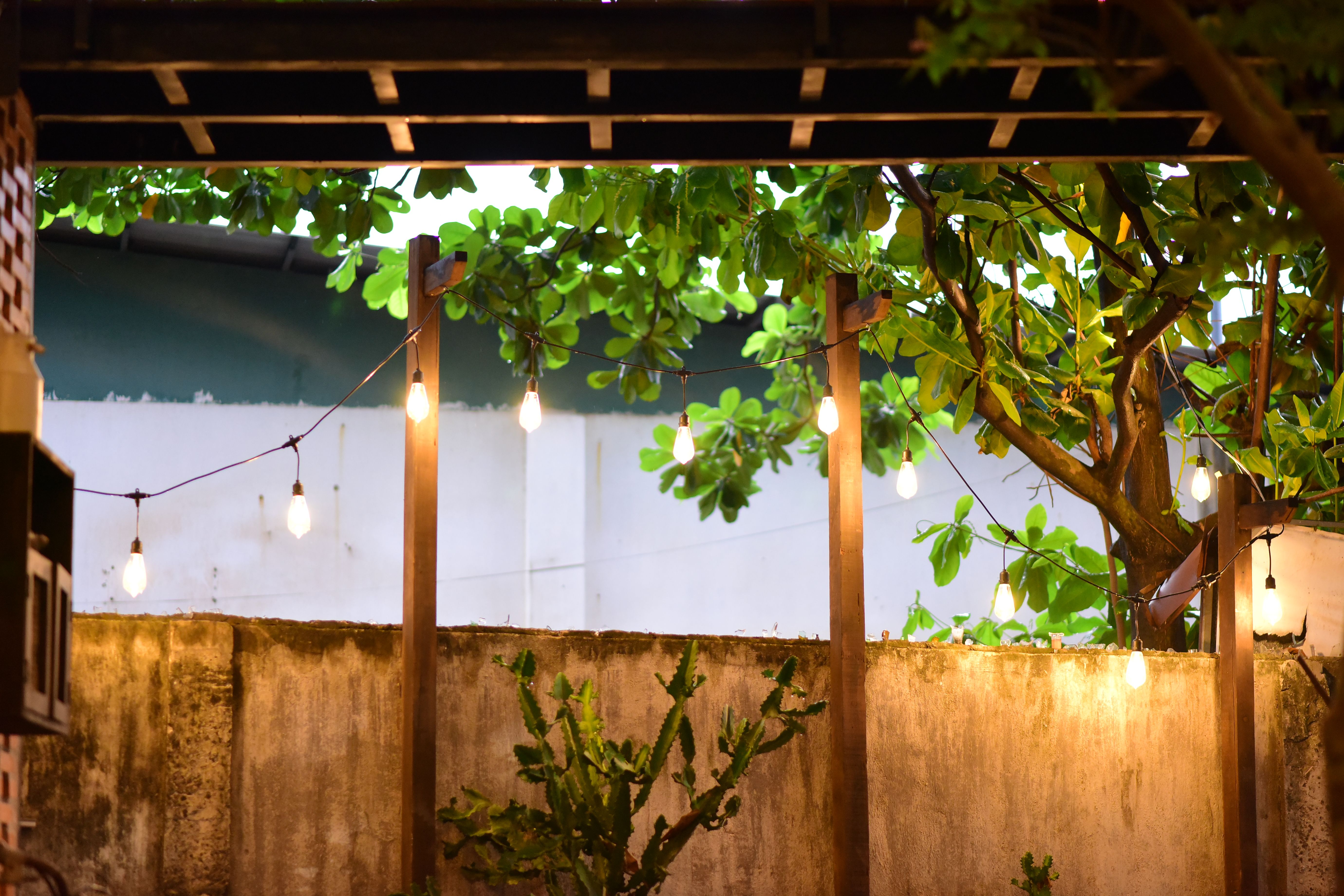
Warm string lights can be lovely when they are kept low and visually tucked into foliage, but do not leave every light on all night. Timers, dimmers, and motion sensors reduce waste and preserve darker corners for nocturnal wildlife. In my view, the best small-garden lighting plan has at least one unlit area. Darkness is not an unfinished part of the design; it is what makes the lit part feel intimate.
A simple makeover plan
You do not need to demolish the garden to change its character. Work in this order so that each decision supports the next one:
- Measure and observe. Note the sun at morning, midday, and evening, then mark the views you want to keep or soften.
- Clear visual noise. Remove broken pots, unused furniture, and plants that have outgrown their position before buying replacements.
- Set the destination. Put the main chair, bench, or table where you genuinely want to spend time.
- Build the frame. Add a path, screen, trellis, floor surface, or large container to give the space an identifiable structure.
- Add planting in layers. Begin with reliable structure, then add seasonal colour and fragrance.
- Test the evening view. Sit inside and outside after dark. Adjust lights so that they reveal rather than glare.
- Live with it for a month. Only then decide what needs replacing. Gardens reveal their practical faults through use.
A particularly effective compact makeover might be no more complicated than a comfortable chair, a narrow platform or paved pad, one trellis with a suitable climber, three substantial containers, and a small warm light near the seat. The restraint is important. Every object should either support the way you use the garden or improve the experience of looking at it.
Frequently Asked Questions
A retreat garden is not measured by how many features it contains. It is measured by how quickly it helps you settle into the moment. Give the eye somewhere to travel, give the body somewhere comfortable to rest, and leave enough quiet space for the garden to feel larger than its dimensions. That is often the makeover that lasts.